Artist Statement


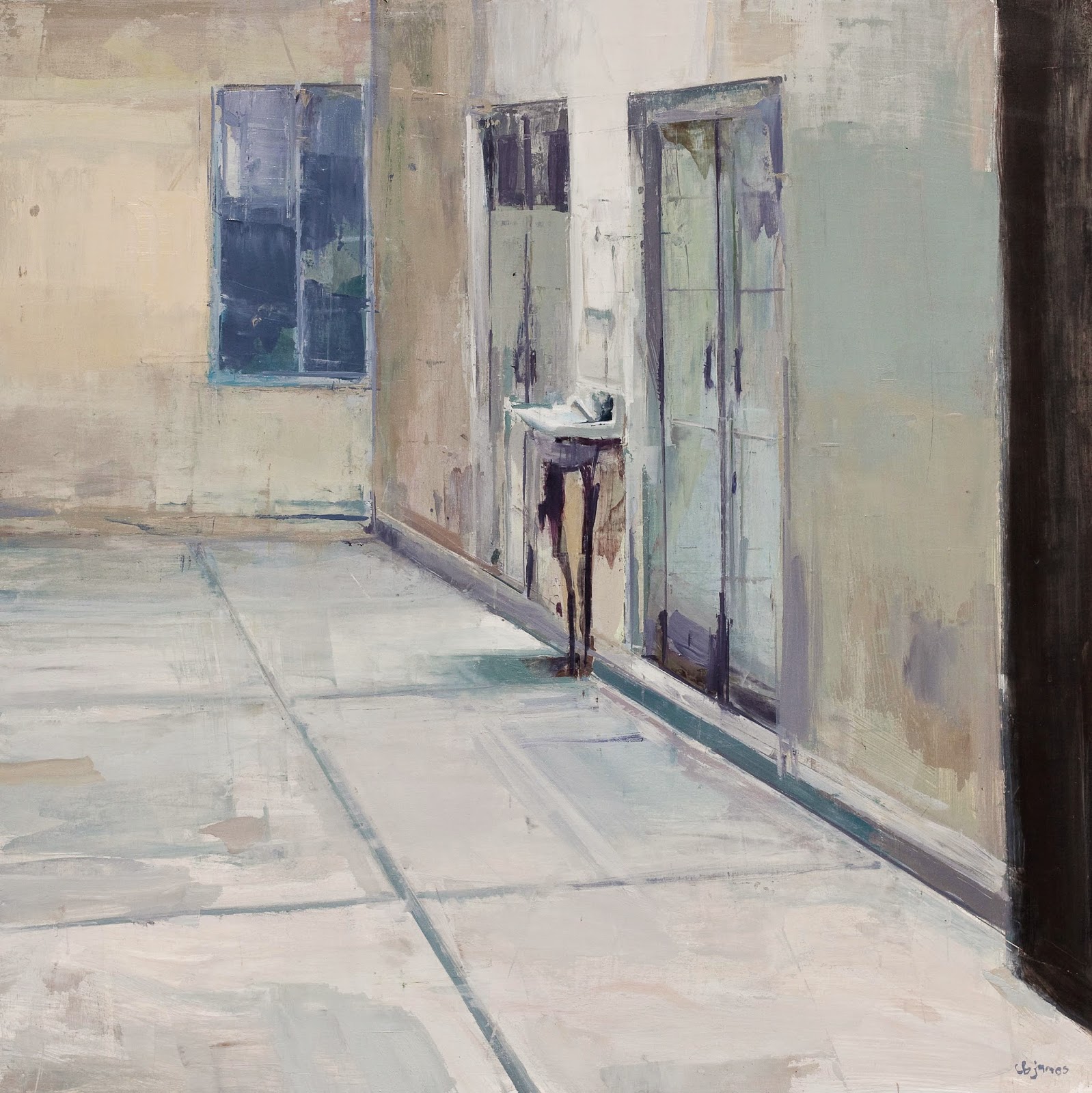
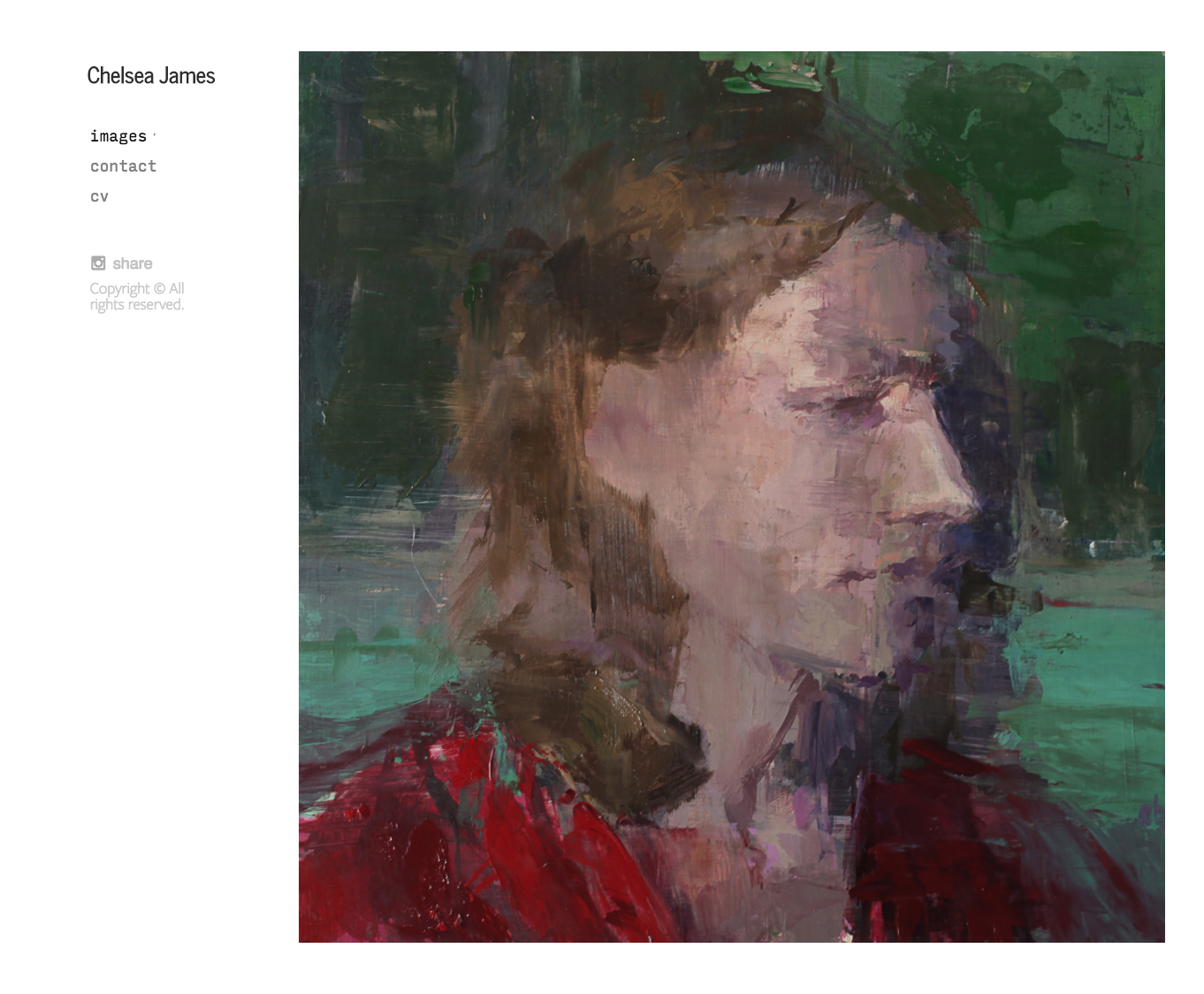
"Painting is a study of our existence, spirit, and environment, derived from experiences in life. I choose objects that evoke childhood memories, create situations of atmospheric mystery, and bring visual interest through interaction. I’m intrigued by subtle shifts in value and color; yet seek a personal interpretation of the objects rather than a replication. Personality is revealed through the process of painting. Abstract remnants from my process remain visible in the final product. The hand must obey the spirit. "

February 8, 2013

art website

My art website is finally finished.  Check it out here.  

November 30, 2012

Artists on Art


Article for Artists on Art 

The Process –

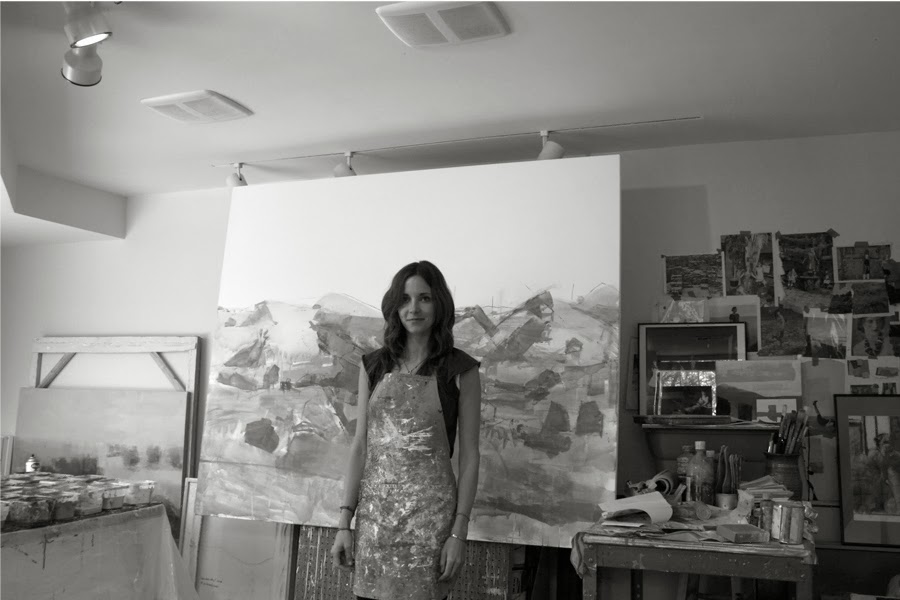
I would like to talk about the process of painting. The process needs to be exciting, compelling and engaging.   During my college years and a few years after, my painting process was very mechanical and formulaic.  It was enough for me then, more than enough, it was challenging and I loved it.  But after I had it down; the monochromatic drawing, the color matching and rendering, I became bored.   Boredom can be used as a very powerful tool when creating because it can encourage you to take risks.    I decided that if I was going to keep painting for me and no one else, I needed to change something.  So,  I placed my usual paint brushes and medium to the side.  I went to a painting store and bought all kinds of tools usually used to putty and paint walls.   I tried acrylics, house paints, tempera, rabbit skin glue, and many other unconventional supplies.  It quickly propelled me out of my comfort zone.  At first it was frustrating, but it soon became liberating and I loved my new freedom. I was creating for me and no one else. What I found was that people responded best to the work that I was creating for myself.  How ironic and joyous it was!

So, now I am going to  discuss step by step my process.   First, I begin with a loose, color patched system.  I am not too concerned with the exact color or value, this is just a rehearsal.  Once I have the colors thinly laid out (thinned with turpentine), I take a long brush and I begin to draw by mapping out proportions.  I do this by using relationships in the landscape or still life’s , triangulation is also used.    This is where the fun begins.  I now make unintentional marks to break up the space and make some mistakes that help me from becoming tedious. These mistakes later became opportunities to enrich the painting.  I redraw, become a little more specific with my values and colors and then I mess it up again, and so on.  Try to think of your process as unconventional as possible.  For example, if you want to draw a bush on the horizon, or a hundred bushes, think first… How do I want to create it? Personally, I don’t want to tediously paint each individual bush.  What if I splat some paint on the horizon or use a string dipped in paint to create a straight line? Or what if I flick my brush to make little dots that give the illusion of receding space? You get the idea.  Be creative.  You are an inventor.    And make it fun, especially if you plan on painting everyday in the studio!  My space is a total mess, my clothes get paint on them, my hands are covered, but I don’t care, I’m having fun.  With my landscapes, I am using a combination of on site studies, photos, drawings, and imagination.  I let the colors emerge organically without starting with a set color map.
Using this process has breathed life into my paintings.  Give it a shot and see where it takes you.  Working from life is always best, but if its not possible, then use a photo but do this only if you  have the knowledge beforehand of working from life. 
It is also best to have a good knowledge of the basic foundations– color, value, drawing.  This will give you freedom to do as you please.  Something else that helped me was limiting the size of brush I was using.  The smallest brush I use is a 2” art brush, even with my small paintings.  This forces me to be decisive and to keep the image abstract for as long as possible. 
Take risks and don’t be afraid to lose what you have.  Once the painting becomes precious, that is a very dangerous thing.  You become afraid to destroy your precious little painting and then it becomes tedious and overworked.  If this happens to you, destroy it by making some unintentional marks and then have the confidence to redraw and find what was lost.  It will be better the second time around.   I strive to paint with a tight eye and a loose hand.  Wouldn’t that be ideal? 
So, if I were to give any advice to another artist, it would be to enjoy the process and paint to please no one but yourself.    And one more thing… make sure to squint and step back.  


November 4, 2012

Kayo Show

Thanks for coming! 


October 20, 2012

New Work

 "Ivins"
12" x 12"
oil on panel
 "Reed"
12 x 12
oil on panel
 "Anna"
12" x 12"
oil on panel
"Aubry"
12" x 12"
oil on Panel
"Roselle with Reed"
oil on panel


 "Roselles blue bathroom"
24" x 24"
oil on panel 
"Blue House"
24" x 24"
oil on panel
"Art Department"
24" x 24"
oil on panel

October 9, 2012

New landscapes

 "North"
24" x 36"
oil on panel 
"Flight"
24" x 36"
Oil on panel

Childhood Memories


February 7, 2012

BMOA NEWS

Trekking through Shifting Landscapes

Ryan Reynolds, Overpass

One of our current exhibits on display isShifting Landscapes, the artwork of painters Chelsea James and Ryan Reynolds. These artists examine the subtleties of their surroundings, and record the persistent changes of everyday landscapes. The pairing of their work mimics the views we see while driving from one side of town to the other- vast crop fields and rolling hills set beside quickly growing neighborhoods and shopping centers. Driving through the Valley to Los Angeles, we find ourselves lost in the quiet mountains before stumbling upon massive skyscrapers and tangled freeways.

Their styles are similar, simplified shapes and dusty, muted colors, but the differences are what make their work so powerful. Ryan Reynolds is able to make the viewer feel the movement (or lack of movement) of the congested freeways, the stuffy air and lack of natural environment. In contrast, Chelsea James allows to us to feel the stillness of the air in a distant open space, uninhabited.

While Ryan Reynolds paints on-location, setting up his easel and paints on a freeway overpass or from the side of the road, Chelsea James does not paint specific places. She takes from her memory locations she has encountered and builds them up, creating new environments – a hill from somewhere, a valley from another place, a tree or rock – from travels in Europe to the United States. Her work is a combination of memories of utopia-like locations.

Chelsea James, Flush

“Painting is a study of our existence, spirit, and environment, derived from experiences in life. I choose landscapes that evoke feeling, create situations of atmospheric mystery, and bring visual interest through interaction. I’m intrigued by subtle shifts in value, color, and texture; yet seek a personal interpretation of the landscape rather than a replication. It is not about the physical location, but rather the interpretation of the landscape, perhaps knowingly familiar to the viewer. Personality is revealed through the process of painting. Abstract remnants from my process remain visible in the final product. The hand must obey the spirit.” – Chelsea James

In his piece, “The Maze Eleven Days” Ryan Reynolds illustrates new construction. Through Reynolds’ interpretation of each day’s work we are able to view the construction in changing light. As the days move forward so does the landscape, transforming from clear blue waters to piles of metal and concrete. The unfinished construction of both the painting and the subject-matter forces the viewer to imagine the end result on their own, and allows the space to remain in a state of construction indefinitely.

Ryan Reynolds, The Maze Eleven Days

“I choose to paint the places along the periphery of public spaces – a footpath, a freeway, a park, or a street corner. I make paintings that capture the process of the visual experience. This includes the immediacy of seeing but also the changes that occur throughout the days and years that we form our collective impressions. Through the process of observation and recording, I focus on the elements of time, space, and light as seen in a changing shadow, a ship unloading cargo, a moving person, or a sky set against the more permanent objects of the build and natural environment. Urban place-based painting offers a visual way to expand our understanding of historical ecology, by opening a dialogue between human culture and the environment, and conveying a deeper understanding of the human role in transforming the landscape.” – Ryan Reynolds

Educational Supplements to this exhibit are downloadable on our Teaching ResourcesPage. For more information, contact lsherwyn@bmoa.org.

This exhibit will remain on display through March 4, 2012.